
Tree removal · Cokato, Minnesota
Hazardous Tree Removal in Wright and Meeker Counties
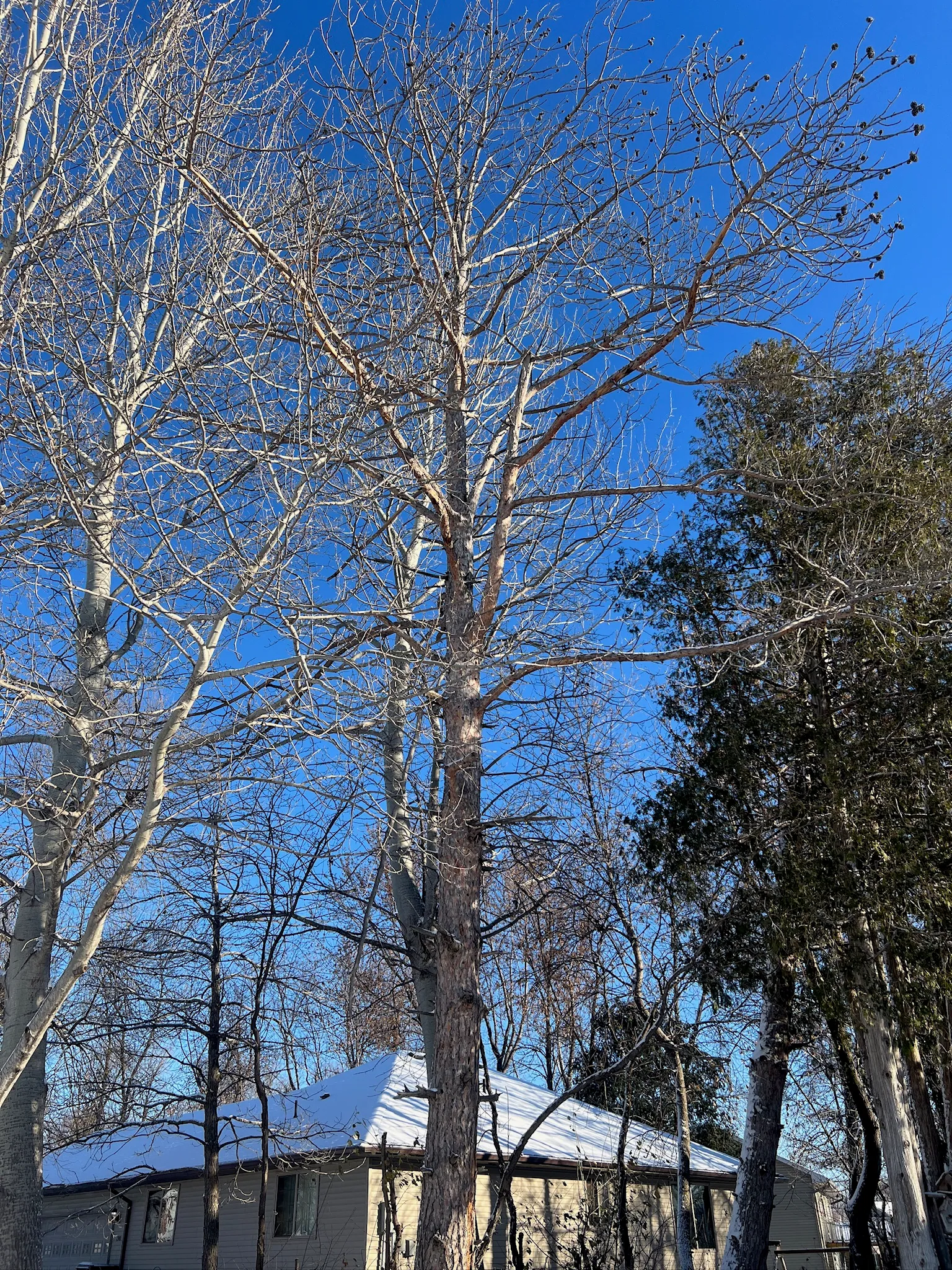
Hazardous tree removal is the work TreeTec is known for around Cokato and Hutchinson: the trees that other crews look at and pass on. A silver maple with the whole canopy hanging over a neighbor's garage. A dead elm above a power drop. An oak so close to the siding there is no direction to put it. These come down in pieces, on ropes, in an order worked out before anyone starts a saw.
What makes a tree a technical job
It is rarely the tree itself. It is what is underneath it and how much room there is. We treat a removal as technical when there is no fall zone big enough to take the whole tree, when the only equipment access runs across something that cannot be driven on, when the tree is dead enough that the wood cannot be trusted to hold rigging loads, or when there is a service line inside the drop radius. Any one of those changes the method completely.
- No clear fall zone, so the tree has to come down in pieces
- Structures, decks, septic tanks or pools inside the drop radius
- Overhead power, cable or service drops in the way
- Dead or decayed wood that will not hold a rigging load
- Access that runs across a septic mound, a slope, or a shoreline
How a rigged removal actually works
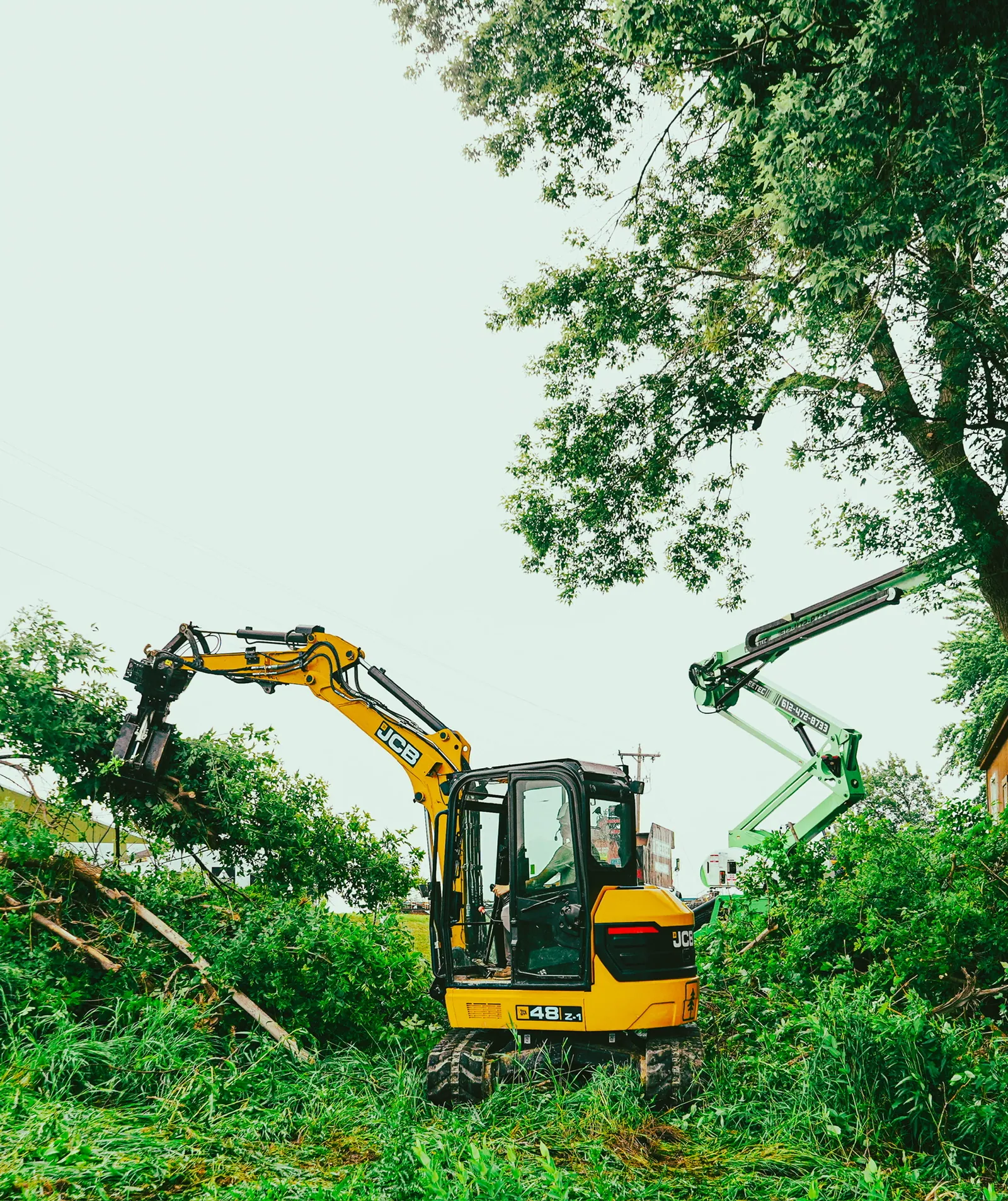
A climber or the lift gets to the top first and works down. Each piece is tied off before it is cut, then lowered on a friction device rather than dropped, so the load never shock-loads the anchor or the ground. Anchor points get chosen for sound wood, not convenience. On the ground, a rigger controls the descent and a spotter keeps the drop zone clear. It is slower than felling and that is the entire point.
Why dead trees are the harder ones
People assume a dead tree is easier because there is no canopy to deal with. It is the opposite. Dead wood is brittle and unpredictable, especially standing ash, which goes from solid to dangerous faster than almost anything else that grows here. Once ash has been dead a season or two, limbs shear off under their own weight and the trunk can no longer be trusted to hold a climber or a rigging load. Those get taken from a lift, not climbed, and they get done sooner rather than later because waiting makes them worse and more expensive.
Working near power
Anything touching or close to a primary line is the utility's work, not ours, and we will tell you that rather than take the job. The service drop that runs from the pole to your house is different, and we regularly work around those. Where the clearance is too tight to work safely, we arrange for the drop to be dropped or sleeved before we start rather than working around a live line.
What you get
- Rigging plan worked out before the first cut, not improvised
- Boom lift for trees too dead or too tight to climb
- Every section lowered under control, nothing dropped near a structure
- Ground crew with a dedicated rigger and spotter
- Full liability and workers' compensation coverage
- Straight answer when a job belongs to the utility instead of us
How the job runs
Why does a hazardous removal cost more than a normal one?
Because it is a different job. A tree that can be felled in one piece is a matter of minutes on the saw. The same tree over a garage takes a crew, a lift, a rigging setup and several hours, because every piece is handled twice: once to cut it and once to land it safely. You are paying for the method and the insurance behind it, not for the wood.
What moves the price:
- How much of the tree has to be rigged rather than felled
- Whether it can be climbed or needs a lift because the wood is unsound
- How close equipment can be set up to the trunk
- What is underneath: roof, deck, fence, septic, pool or shoreline
- Whether a service drop has to be arranged around
- Condition of the wood, since dead and brittle trees are slower to work
Where we do this work
Hazardous Removal is something we do right across our area, out of the shop in Cokato. The towns we are in most often:
- Hazardous Removal in Cokato
- Hazardous Removal in Dassel (5 miles from the shop)
- Hazardous Removal in Litchfield (17 miles from the shop)
- Hazardous Removal in Hutchinson (22 miles from the shop)
- Hazardous Removal in Annandale (14 miles from the shop)
- Hazardous Removal in Maple Lake (18 miles from the shop)
- Hazardous Removal in Howard Lake (7 miles from the shop)
- Hazardous Removal in Waverly (12 miles from the shop)